Key takeaways
- Spread two to three inches of mulch in beds.
- Keep mulch pulled back from trunks and stems.
- Hardwood, pine bark and pine straw all work well.
- Refresh yearly; do not pile new mulch on thick old mulch.
Why mulch
Mulch holds moisture, moderates soil temperature, suppresses weeds and improves soil as it breaks down. It also frames plants and gives beds a finished look.
Thin or missing mulch leaves soil exposed to weeds and drying.
The right depth
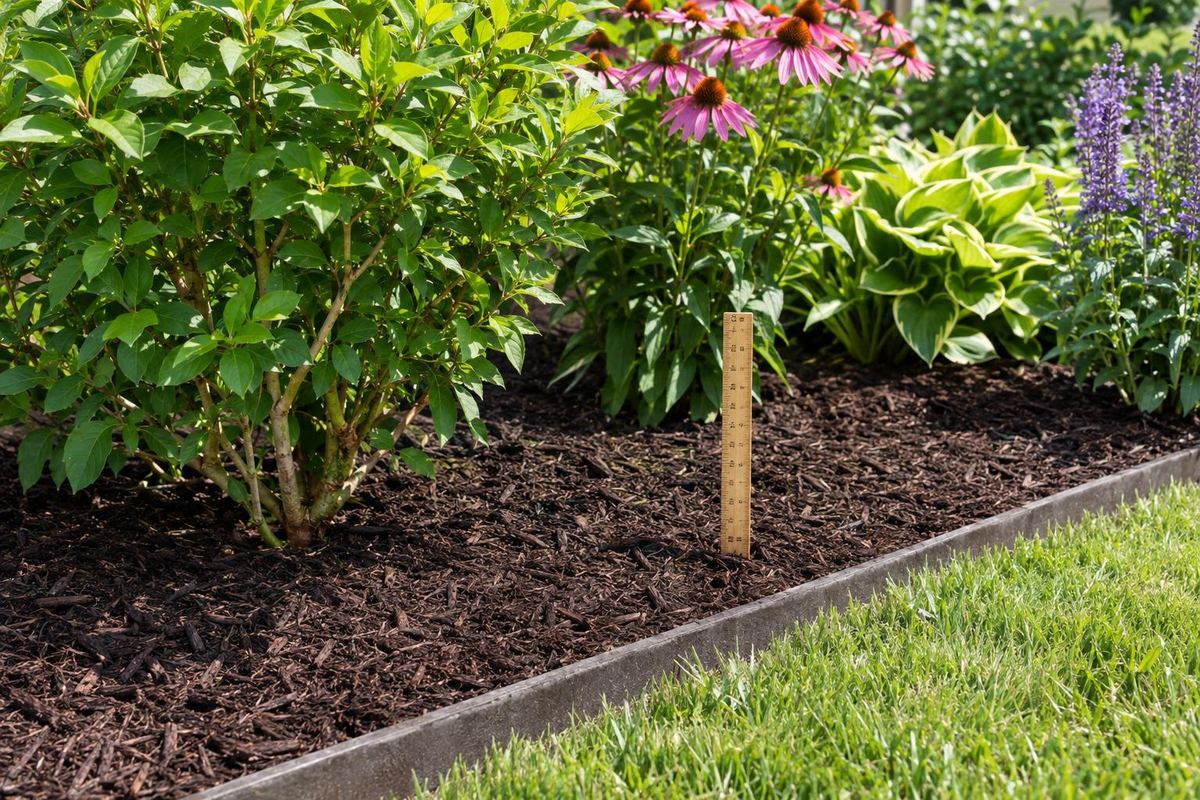
Two to three inches is ideal. Too thin lets weeds through, and too thick can keep roots too wet or smother plants.
If old mulch is still thick, fluff it with a rake and add only as much as needed.
Avoid volcano mulching
Piling mulch against tree trunks traps moisture and can cause rot and pest problems. Leave a few inches of clear space around trunks and plant stems, and spread mulch in a flat, wide ring.
This is one of the most common landscape mistakes.
Choosing a material
Shredded hardwood is a classic and breaks down well. Pine bark nuggets and pine straw suit acid-loving plants and slopes. Dyed mulches keep color longer.
Rock and gravel last longest but do not feed the soil.
Quick answers
When is the best time to mulch?
Spring is traditional, once soil has warmed, with a touch-up in fall if needed.
Do I need landscape fabric?
Usually not. Fabric can interfere with soil improvement and make future planting harder.