Key takeaways
- Tall fescue handles shade and stays green most of the year but struggles in summer heat.
- Bermuda loves full sun and heavy wear but goes brown in winter and hates shade.
- Zoysia is dense and tough with moderate shade tolerance, but it is slow to establish.
- Sun, shade, pets and how much time you have decide the right choice.
Tall fescue
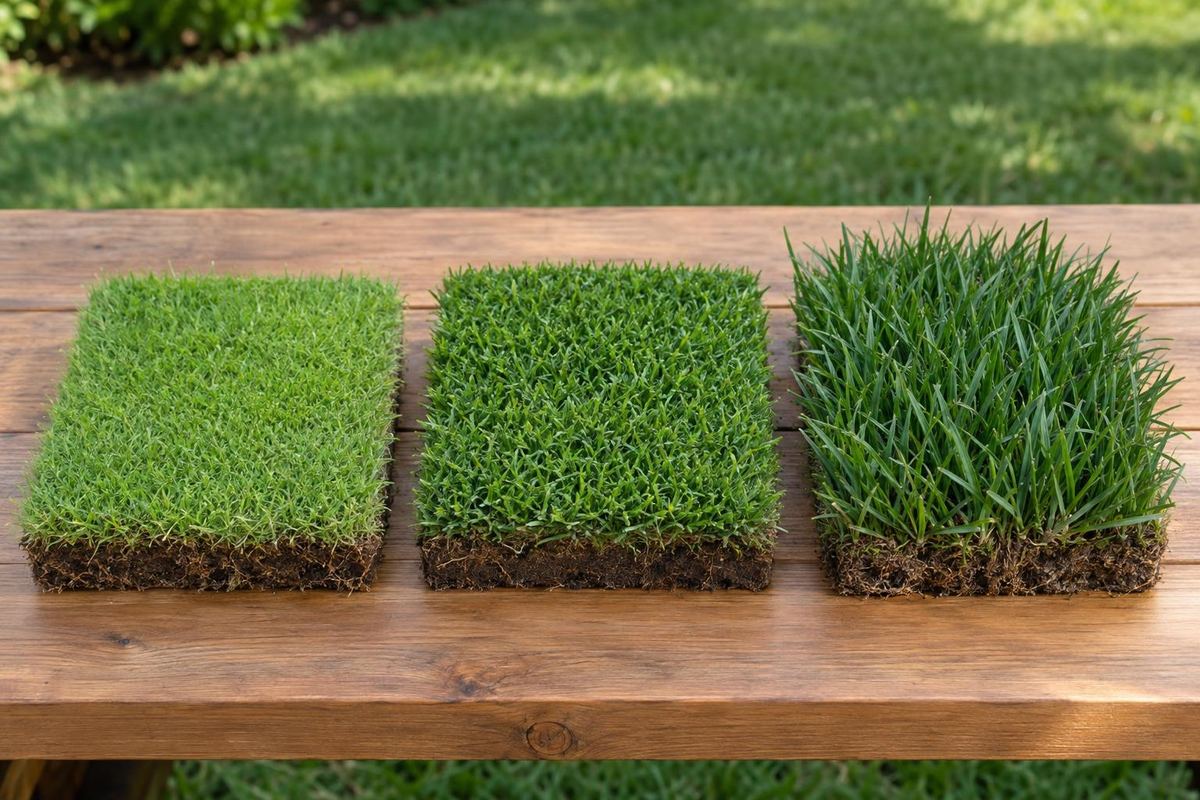
Tall fescue is the most common home lawn grass in Middle Tennessee. It is a cool-season grass with wide blades, good shade tolerance and green color through most of the year. It is seeded in early fall and needs regular water and feeding in summer stress.
The tradeoff is heat. In July and August fescue can thin, and it is the grass most prone to brown patch.
Bermuda
Bermuda is a warm-season grass that thrives in full sun, tolerates heat and drought and recovers quickly from wear. It makes a fine-textured, dense lawn that handles kids, dogs and sports.
Bermuda goes dormant and tan after the first hard frost and needs at least six to eight hours of sun. It spreads aggressively into beds without edging.
Zoysia
Zoysia forms a dense, carpet-like turf that crowds out weeds. It handles sun and some shade, feels soft underfoot and is more cold tolerant than bermuda.
Zoysia grows slowly, so it is slower to fill in and repair, and it is usually established from sod or plugs. It also goes tan in winter.
How to choose
Look at your sun, shade, traffic and expectations. A mostly shaded yard points to fescue. A sunny backyard with dogs or kids points to bermuda. A homeowner who wants a thick lawn and does not mind slow establishment may love zoysia.
If you are not sure, our team can look at your property and recommend a grass and a plan.
Quick answers
Which grass is best for shade?
Tall fescue handles the most shade, while bermuda needs full sun.
Can I mix grass types?
Mixing is generally not recommended because each grass has different needs and calendars.