Key takeaways
- Fall is the best time to aerate, overseed and feed fescue lawns.
- Do not let thick layers of leaves sit on the grass.
- Light leaf cover can be mulched into the lawn.
- A final feeding in late fall helps roots and spring green-up.
Why fall matters
Warm soil and cool air make fall ideal for root growth. For fescue, what you do in September and October shapes next year's lawn.
Aeration, overseeding and feeding in fall repair summer damage and thicken turf.
Leaves: friend or foe
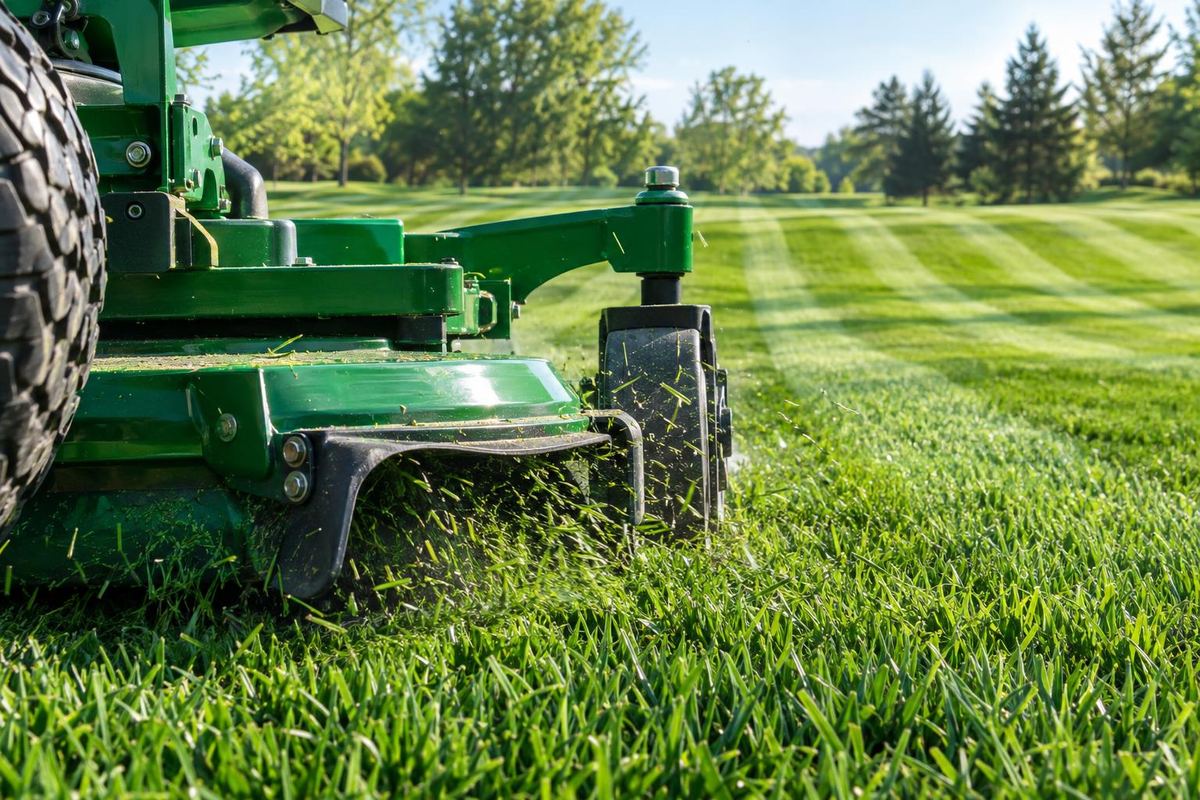
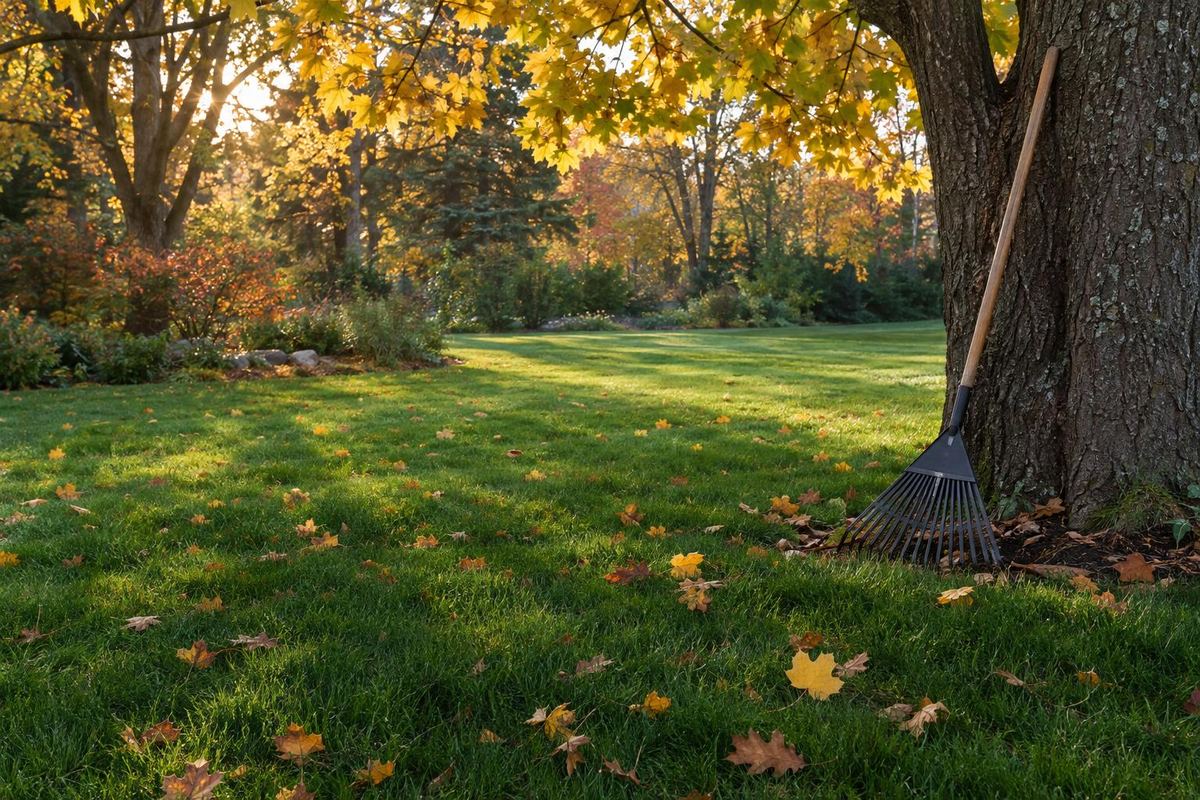
A light scatter of leaves can be mulched into the lawn with the mower, adding organic matter. Thick, matted layers block light, hold moisture and smother grass.
Remove heavy layers regularly during peak drop.
Fall feeding
Fertilize fescue in early fall and again in late fall while it is still green. Late-season feeding supports root growth and early spring color.
Soil tests can guide the right blend.
Last mow and winter prep
Make a last mowing at your normal height. Clean up the beds, protect irrigation from freezing and avoid heavy traffic on frozen turf.
Plan spring services early.
Quick answers
Can I mulch leaves with my mower?
Yes, when the layer is light. Make multiple passes so pieces are small.
When should I stop mowing?
Mow as long as the grass is growing, then make a final cut before winter.