Key takeaways
- Follow the one-third rule: never remove more than a third of the blade at once.
- Cutting height depends on the grass: taller for fescue, shorter for bermuda.
- Sharp blades make clean cuts that heal quickly.
- Change your mowing pattern each time.
Set the right height
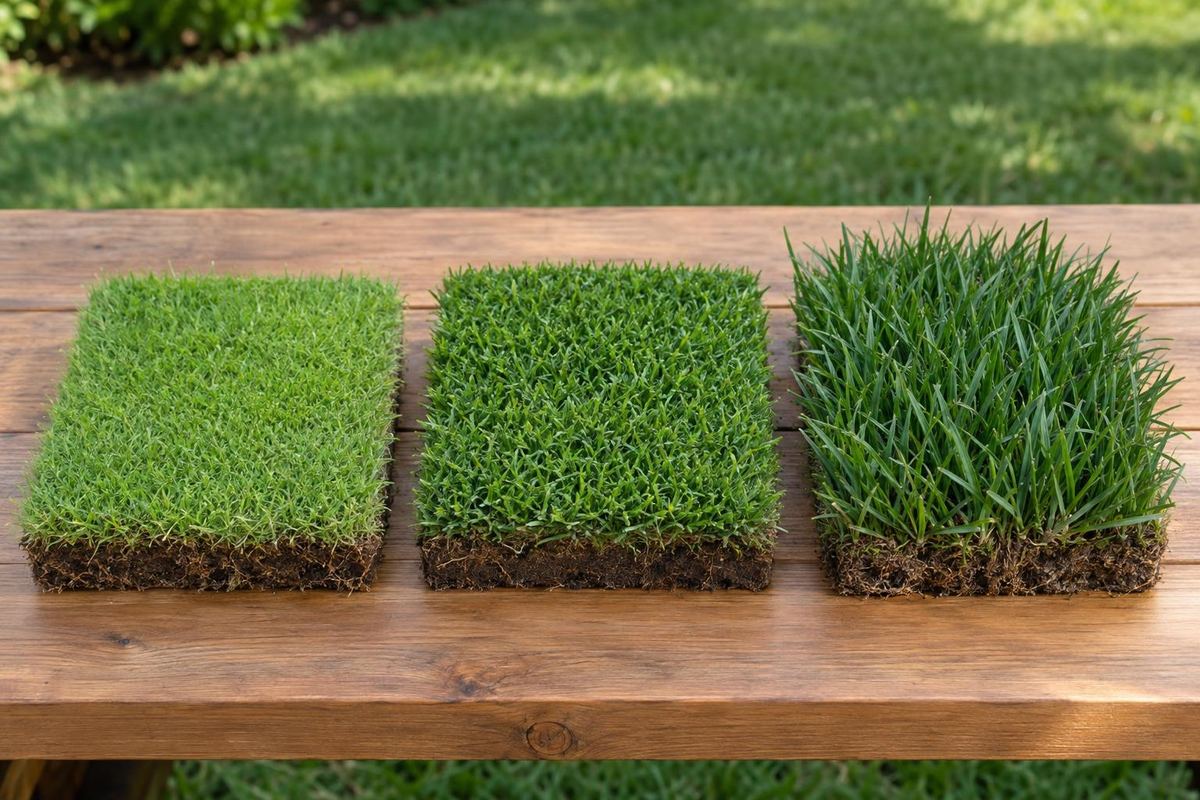
Tall fescue likes to be kept around three to four inches. Zoysia does well at an inch and a half to two and a half inches, and bermuda is typically kept short, around one to two inches.
Mowing too short stresses grass, exposes soil to weed seed and dries the lawn out faster in summer.
Follow the one-third rule
Removing more than a third of the blade at once shocks the plant. If the lawn has gotten long, bring it down gradually over several mowings.
This is why mowing on a regular schedule is better than cutting occasionally.
Keep blades sharp
Dull blades tear grass and leave ragged, brown tips that look frayed and invite disease. Sharpen blades at least once a season, more if you mow a lot.
A clean cut helps the lawn recover quickly and look better.
Mow dry, change direction and manage clippings
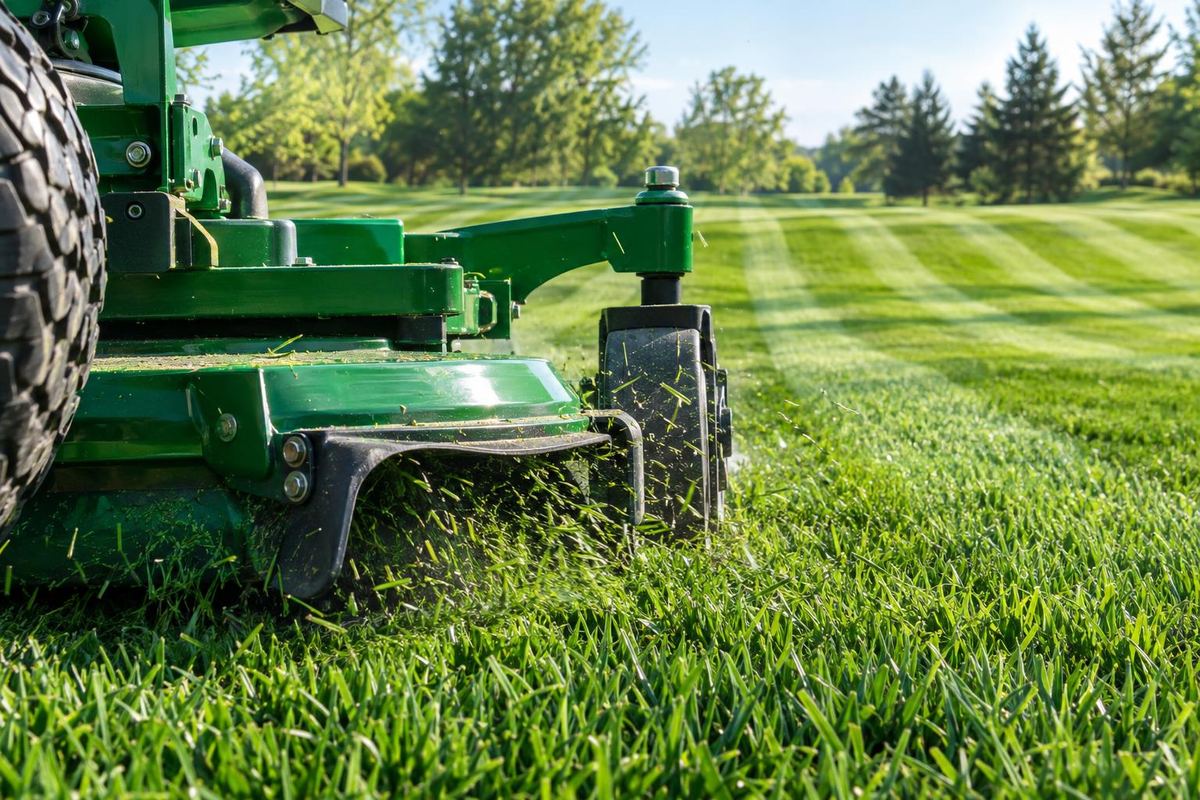
Wet grass clumps and mowers rut soft soil, so wait for a dry day. Change your mowing direction each time to prevent ruts and help grass stand upright.
Leave clippings on the lawn when they are short. They break down quickly and return nutrients. Bag or remove thick clumps.
Quick answers
How often should I mow?
Weekly in the main growing season is common, and less often when growth slows in heat and in cooler seasons.
Should I bag my clippings?
Usually not. Mulched clippings feed the lawn. Remove them if they clump or the grass is very long.