Key takeaways
- Grubs feed on roots in late summer and early fall; damaged turf peels up like a carpet.
- Preventive treatment is usually applied in early summer.
- Animals digging at night can signal grubs.
- Check by peeling back a square foot of turf.
What grubs do
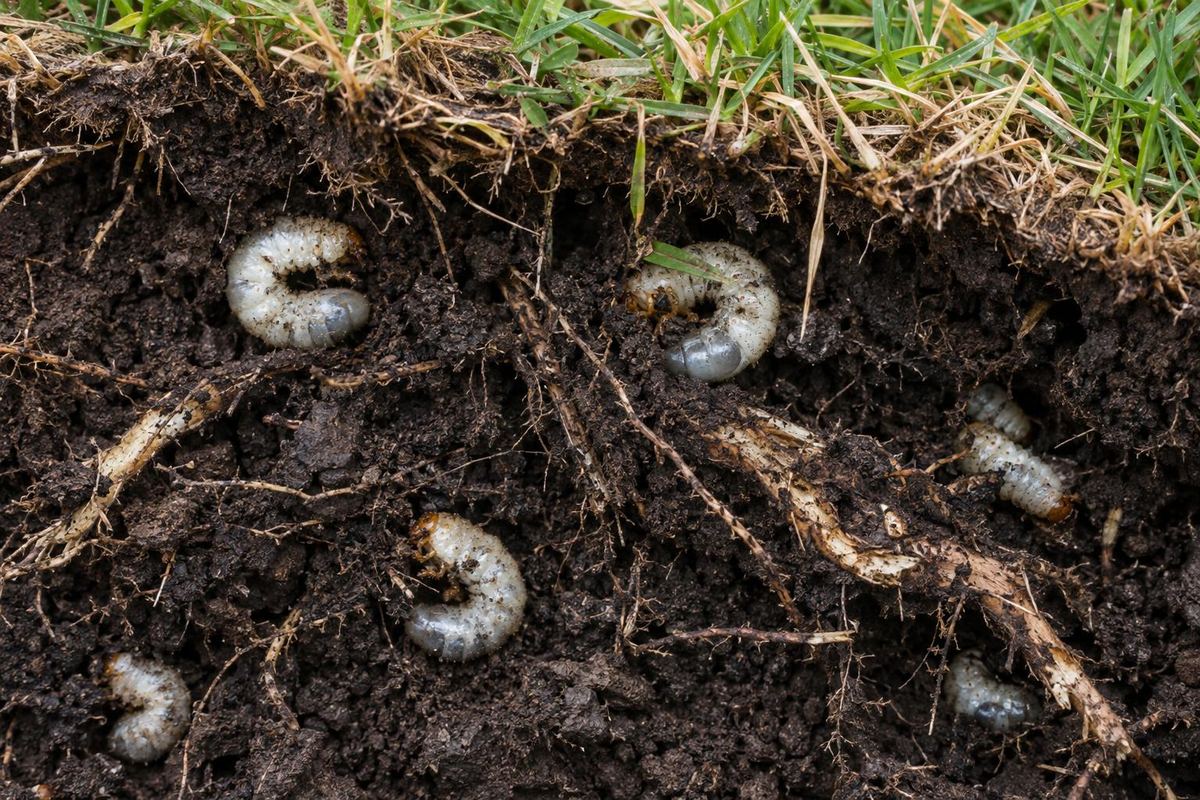
Grubs are the larvae of beetles, including Japanese beetles. They hatch in summer and feed on grass roots, cutting off the plant's water supply. Damaged lawns wilt, turn brown and lift up easily.
Skunks, raccoons and armadillos digging may be hunting for grubs.
How to check
Cut a square foot of turf on three sides and peel it back. If you see more than about six to ten C-shaped white grubs, treatment may be worth it.
Check in late summer, when grubs are growing and damage appears.
Timing treatment
Preventive products are typically applied in early summer, before eggs hatch. Curative treatments work on active grubs in late summer to early fall.
Timing depends on the product and weather.
Other pests
Armyworms, sod webworms and chinch bugs can also damage turf quickly. Look for chewed blades, moths flying up at dusk and irregular browning that spreads.
Prompt identification keeps damage small.
Quick answers
Are grubs always a problem?
A few are normal. Treat when counts are high or damage appears.
Can damaged turf recover?
Often with water and feeding, though badly damaged areas may need to be reseeded or sodded.