Key takeaways
- Aim for about an inch of water per week from rain and irrigation combined.
- Water deeply and less often rather than a little every day.
- Early morning is the best time because it limits disease and evaporation.
- New seed and sod need a different, more frequent schedule.
The one-inch rule
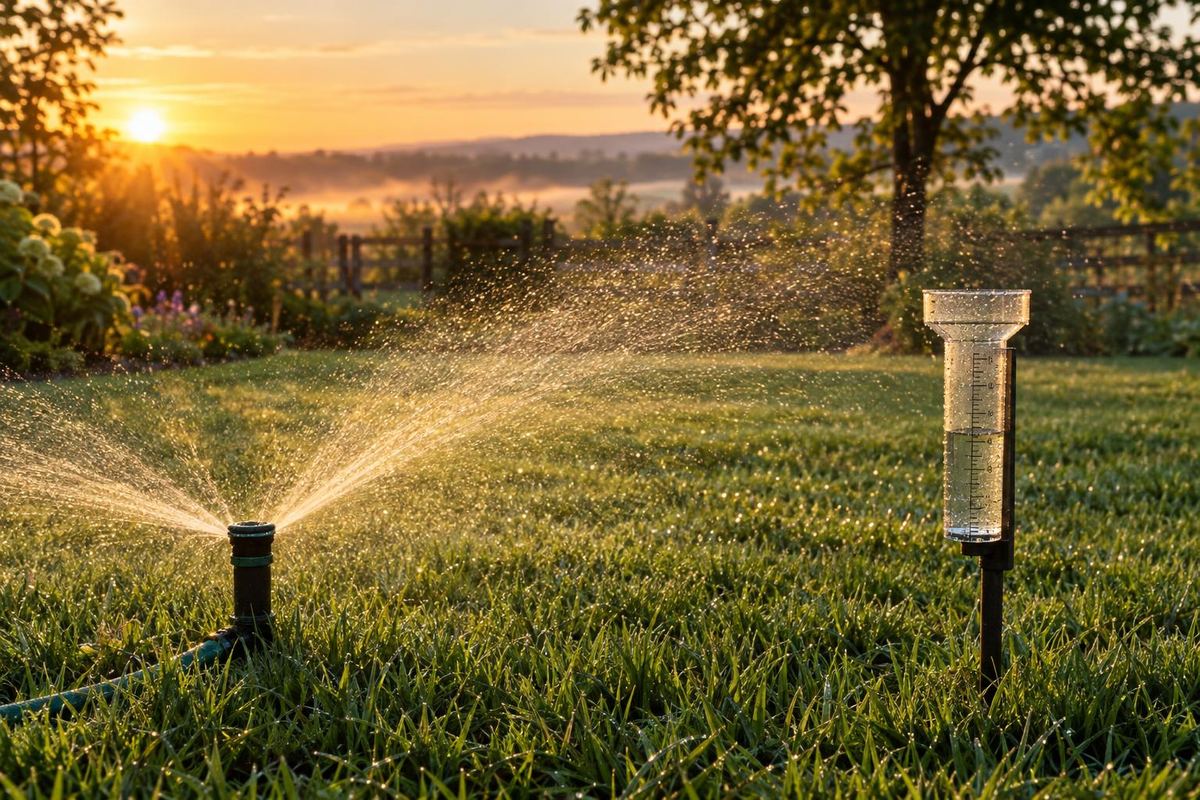
Most established lawns do well with about an inch of water a week during the growing season, counting rainfall. Heat waves may call for more.
Put out a few empty tuna cans while your sprinklers run to measure how long it takes to reach an inch.
Deep and infrequent
Watering deeply but only a couple of times a week pushes roots down, which makes grass more drought tolerant. Shallow daily watering leads to shallow roots and weak turf.
On Middle Tennessee clay, water may run off quickly, so splitting the watering into two cycles can help it soak in.
Best time of day
Water early in the morning, between about 4 and 9 a.m. Wind is calm and the grass dries as the sun comes up.
Night watering keeps blades wet for hours and encourages fungus like brown patch.
New seed and sod
New seed needs the top inch of soil kept moist, often with two to four short waterings a day, until it sprouts. New sod needs similar care for the first couple of weeks.
Then taper gradually to deeper, less frequent watering as roots grow.
Quick answers
How do I know if my lawn needs water?
Grass that stays footprinted after walking, or that turns dull blue-gray, is asking for water.
Does rain count?
Yes. Count rainfall toward your weekly inch and skip irrigation when it has rained enough.